Psychometry Blog
What is psychometry? Psychometry has various different fields, such as mathematics, but in this context, we are going to talk about psychometry as a form of extrasensory perception.
Psychometry is a form of scrying which involves gaining knowledge about an object, person, or place by touching or being near it. We can accumulate information about people or events attached to or who have interacted with the object or place purely by touching or entering it. We work a bit like an Apple Find My app, but without the technology, just using our own personal inner tools, without the need for technology.
All objects have a history or energy on them or beaming off from them; think of it like atoms, moving particles and frequencies; it is connecting to a certain energy field.
This is why you may sometimes hear psychics talking about clearing energy off objects, so it doesn't leave negative energy behind from the previous person or place.
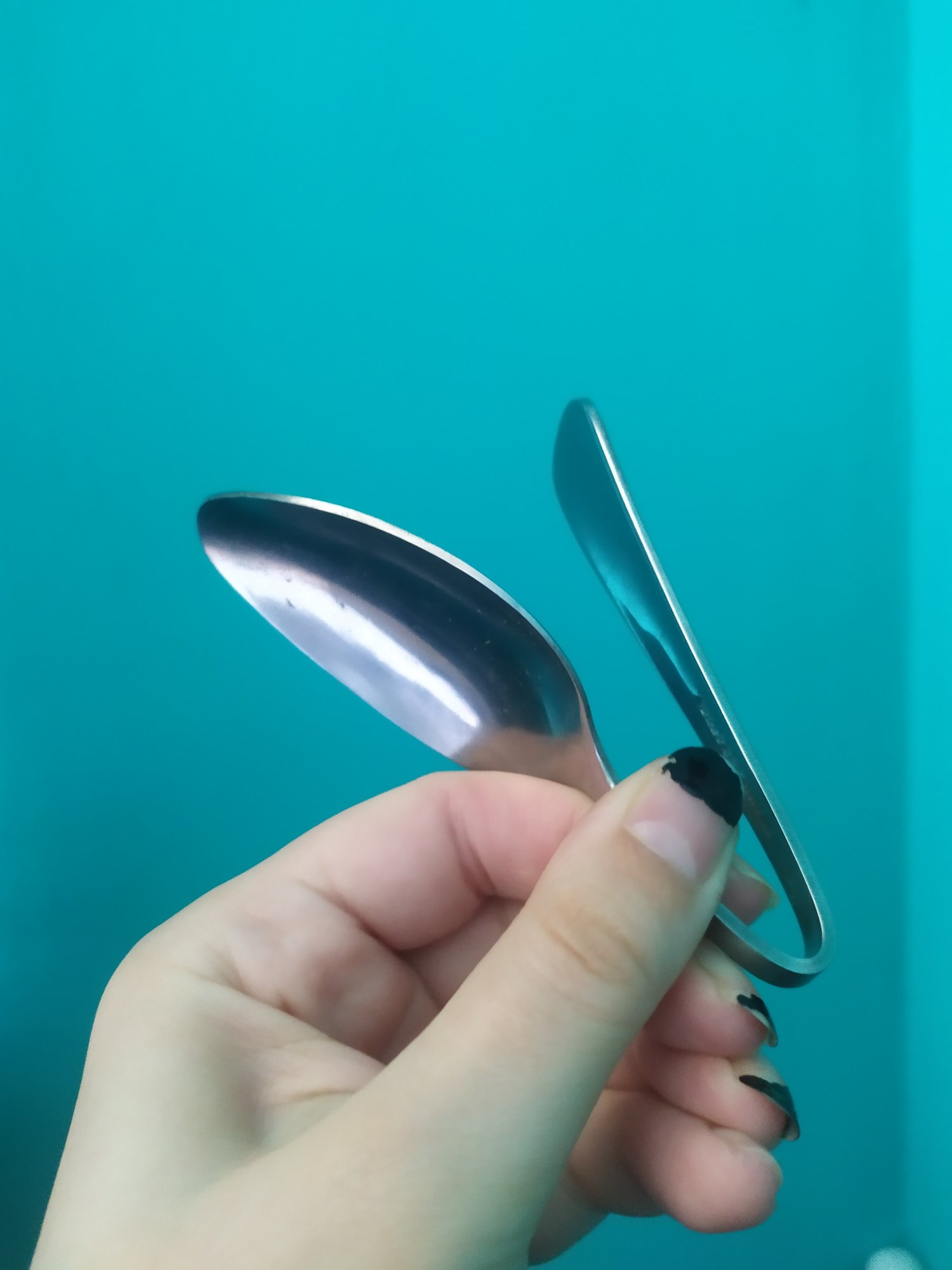
Psychometry can be read through a photo, jewellery, watch, or metal object, for example. When I do psychometry I get a mixture of clairvoyance and clairaudience and often times names of people or places. Many people think that metal seems to emit the best type of energy field from which to read from.
Psychometry first appeared as a term labelled by Dr. Buchanan in the mid nineteenth century. He was researching spiritualism and phrenology, (like palm skull reading). He claimed that the person holding the object would be able to sense and replay the energy information stored in soul of the item.
William F. Danton also did psychometry experiments in the mid to late 1800s with his wife. and wrote a book called, "Nature's Secrets and the Soul of Things". "Psychometric Researches and Discoveries".
In the early 1900's German physician Gustav Pagenstecher also did some psychometry experiments in Mexico City. He claimed that the psychometer could sense information about an object through vibrations that are emitted from it.
One of his patients Maria Reyes Zierold when having hypnosis treatments to help her insomnia correctly described the things that were happening outside the room, not within her distance of vision. In 1919 Dr. Pagnstecher took his discovery to a local medical society, doing a controlled test and they were amazed at her Zierold's abilities.
Similar experients can be done in the room with psy cards, where the person does not look at the cards, but is able to sense, without looking, which cards the other person is holding.
It is debateable whether psychometry works through theory 1), the past having an invisibly vibrational form on that from which all matter exists as vibrations on a subatomic level. They exist within a “cosmic hologram,” and psychometers can to access this information at any time. Or, theory 2), it exists as an energy form through aura energy fields. personal information was linked to an object through an imprint left by the owner’s aura or energy field. They left an energetic, "fingerprint", on the object, from which psychometers can tap into and interpret the energy. I am a fan of the second theory.
Psychometry has been portrayed as a skill in popular films, such as Star Wars with The Force.
In the popular Gothic film, The Crow, Brandon Lee takes the memory energy from the policeman's head and transmits it to himself, using his hands as a tool to transmit, he is able to keep the memory stored in himself and then later passes and transmits not only his memory, but real pain onto the "bad guy". The Crow is his spirit animal that helps him "see".
In the later nineteenth century demonstrations of psychometry became a popular part of stage acts and séances, with participants providing a personal object for "reading" by a medium or psychic. It is also commonly offered at psychic fairs as a type of psychic reading.
In some instances psychometry has been used in police detective cases, just like the military have used remote viewing in some cases.
This type of reading, like psychic readings have not been officially fully proven and still subjectively classed as a pseudoscience.